Why fire ant mounds keep coming back in a Williamson County yard
If new mounds appear two weeks after you treated the old ones, the colony did not die. It moved.
September 17, 2026 · 3 min read
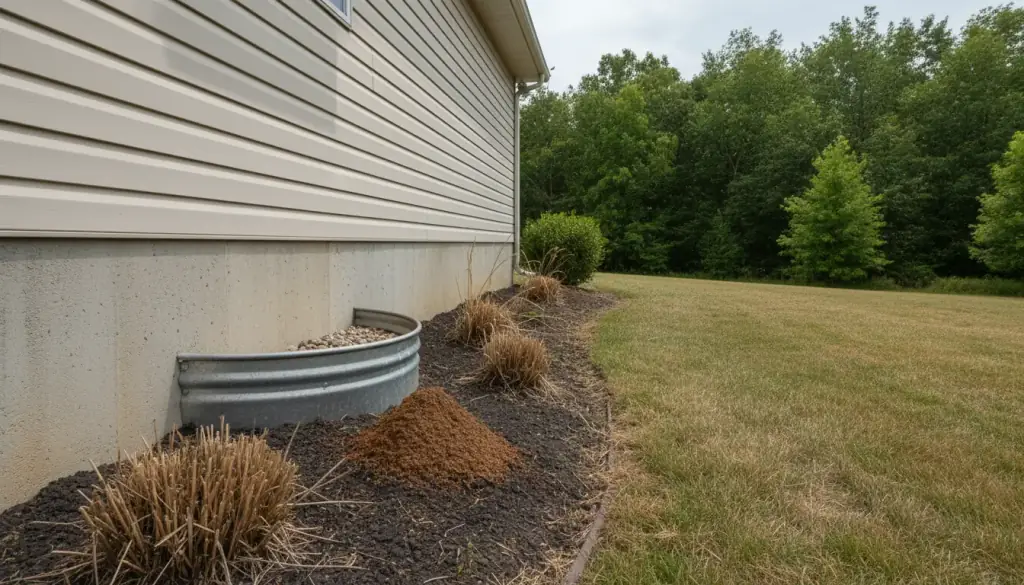
Fire ants are considered one of the most aggressive ant species and they can be genuinely dangerous, particularly around small children, elderly relatives and pets. They are also the pest most likely to make a homeowner feel like they are losing. You treat the mounds on Saturday. By the middle of the month there are new ones ten feet away, and it looks like nothing worked.
Something did work. It just was not the thing you needed.
The mound is a chimney, not the house
What you see as a mound is the visible top of a structure that runs down and sideways underground. The colony is not sitting in the dome waiting for treatment. Worker ants forage well beyond it, and foraging tunnels can extend a surprising distance from the mound itself.
So when a mound gets drenched or knocked apart, two things tend to happen. Some of the colony dies. The rest, including the part that actually matters for the colony's survival, relocates. What looks like a new infestation two weeks later is frequently the same colony in a new place, and sometimes it is a colony that has split into more than one.
That is the mechanism behind almost every frustrated conversation about fire ants. Mound by mound treatment moves the problem around a yard rather than ending it.
Why the whole yard has to be treated
A proper fire ant treatment does both halves. King's treats all active mounds on the property, then broadcasts bait across the entire yard on an average size lot. The bait is the part that reaches what you cannot see.
Bait works because foraging ants carry it back into the colony themselves and share it. That means it reaches colonies nobody located, including the ones that have not yet built a mound obvious enough to notice. It is slower than a drench, and that patience is the point. The aim is not a dramatic result on the day, it is no new mounds in a month.
On larger acreage, broadcasting the whole property stops making sense, so the approach changes to a thirty foot perimeter around the home. You get a treated buffer where people and animals actually are, without baiting pasture that nobody walks on.
Weather is part of the method
Fire ant treatment cannot be applied while it is raining. That is not caution for its own sake. Bait needs to be picked up by foraging ants in usable condition, and wet ground undermines that. Central Texas weather being what it is, an appointment occasionally moves, and a company that moves it is protecting the result rather than being awkward.
One treatment or a schedule
Fire ant work can run either way. It bundles naturally into a bi-monthly or quarterly preventative service, which is how most Georgetown properties handle it, because prevention is built into the cadence and the pressure never gets a chance to rebuild.
It also works as a stand alone treatment applied once every six months, which suits a property where fire ants are the only real problem and the rest of the pest situation is quiet. There is no long term contract either way, so the schedule is a decision you can change.
What to tell the office when you call
- Roughly how many active mounds you can count, and whereabouts on the property
- Whether they are in lawn, beds, along a fence line, or near a slab or driveway edge
- The approximate size of the yard, since that decides broadcast versus perimeter
- Whether children, pets or livestock use the affected areas
- Anything you have already applied yourself, and when
That last one genuinely helps. Knowing what has already been put down, and how recently, changes what the technician does next rather than repeating it.
King's has been treating Williamson County yards since 1982 and uses the latest products from Maxforce for ant work. If the mounds in your yard keep reappearing in slightly different places, that is a recognisable pattern with a known answer, not bad luck.
King's Pest Control, (512) 930-7378
Call (512) 930-7378More articles
Why scorpions turn up indoors in Georgetown, and what keeps them out
They are not coming in for food. They are coming in because the outside stopped suiting them, and your house did.
You found a brown recluse in the house. What that actually means
One spider is information. Several over a fortnight is a pattern, and patterns are treatable.